
If you want to learn how to start a hosting business, the fastest and safest way is to begin with cPanel reseller hosting, then grow step by step as you get clients and experience. This guide explains the whole process in simple words, with real steps you can follow even if you are a newbee in hosting world.gw2k+1
What Is a Hosting Business and Why It’s Profitable
A hosting business means you sell web hosting space and related services (like domains, emails, SSL, backups) to customers who need their websites online. Instead of building your own datacenter, most beginners start by renting server resources from a big provider and reselling them under their own brand.gw2k+3
Why is this model attractive?
- Websites are always needed, so demand is steady and growinggw2k
- Hosting is a subscription service, so you get monthly or yearly recurring incomeserverfellows
- You can start small (even with one reseller plan) and scale when you have more clientsskynethosting+1
- You don’t need to own servers at the beginning; you can use someone else’s hardwarenimb+1
Step 1: Do Basic Market Research
Before you spend any money, understand who you will sell to and what they need.
Ask yourself:
- Who is my target customer? (local small businesses, freelancers, WordPress users, agencies?)gw2k
- What are competitors charging for similar plans?gw2k
- What extra value can I offer? (free migrations, better support, faster speed, local language support?)serverfellows
You don’t need a big report, just a clear idea of your niche. For example, “I will offer affordable WordPress hosting for small shops in my city with free setup and WhatsApp support.” This makes marketing easier later.
Step 2: Choose Your Business Model
There are mainly three models:
- Reseller Hosting – You buy a reseller plan (cPanel/WHM) and resell accounts. Lowest cost, easiest start.gw2k+1
- VPS/Dedicated Reseller – You rent a VPS or dedicated server, install WHM/cPanel, and create accounts. More control, more responsibility.buyvps
- Own Infrastructure – You buy servers, rent rack space, manage network, power, cooling. Very expensive and complex, not for beginners.nimb+1
For most people asking how to start a hosting business, reseller hosting is the best first step.gw2k+1
Step 3: Pick a Reliable Parent Host
Your reputation depends on your upstream provider. Look for:
- Uptime: 99.9% or higherserverfellows
- Performance: NVMe/SSD storage, good CPU/RAM, modern hardwareskynethosting
- cPanel/WHM included: So you can create client accounts easilyserverfellows
- White-label options: Custom branding, private nameservers (ns1.yourbrand.com)skynethosting
- Backups and security: Daily backups, DDoS protection, SSL supportserverfellows
- Support: 24/7 technical support in case of server issuesgw2k
Read reviews, test support, and maybe start with a small plan to check quality before going all-in.
Step 4: Register Your Business and Domain
Even if you start small, treat this like a real business:
- Choose a brand name (short, easy to spell, related to hosting or tech)
- Register a domain (e.g., yourbrand.com)
- Check local rules: in many countries you need to register as a sole proprietor or small company, especially if you issue invoicesgw2k
- Decide payment methods: bank transfer, credit card, PayPal, Stripe, local gateways
You don’t need a fancy office; a laptop, domain, and hosting plan are enough to begin.
Step 5: Set Up Your Hosting Packages
This is where you decide what you will sell. Typical packages:
- Starter: 5–10 GB space, 50–100 GB bandwidth, 5–10 email accounts, 1 website
- Business: 20–30 GB space, 200–300 GB bandwidth, unlimited emails, free SSL, priority support
- Pro / Agency: 50+ GB space, 500+ GB bandwidth, free migrations, daily backups, faster support
In WHM (WebHost Manager), you create these as “packages” once, then reuse them for each new client. Keep it simple at first; you can add more plans later.serverfellows
Step 6: Build a Simple Website and Sales Page
Your website is your shop. It should clearly show:
- Your hosting plans and prices
- Features (SSD storage, free SSL, backups, support channels)skynethosting
- FAQ section (to reduce support questions)
- Contact form, WhatsApp, or live chat button
- “Order Now” or “Get Started” buttons
You can use WordPress + a hosting theme, or even a simple one-page site at the start. Include trust elements like:
- “99.9% uptime”
- “24/7 support”
- “Free migration”
Don’t over-design; clarity is more important then fancy graphics.
Step 7: Set Up Billing and Automation (Optional but Smart)
As you grow, manual invoicing becomes messy. Many hosts use WHMCS or similar billing software to:
- Generate invoices automatically
- Accept online payments
- Auto-create cPanel accounts when payment is receivedskynethosting
- Handle renewals, suspensions, and upgrades
Some reseller providers even include WHMCS licenses or discounts. If you’re very small, you can start with manual invoices and later move to automation.skynethosting
Step 8: Market Your Hosting Service
You can have the best hosting, but without customers, there is no business. Simple marketing ideas:
- Tell friends, family, and existing clients (if you’re a designer/developer)serverfellows
- Offer “free hosting for 1 month” or “50% off first 3 months” to get early usersserverfellows
- Join local business groups, Facebook groups, freelancer communities
- Write simple blog posts like “How to choose hosting for small business in [your city]”
- Partner with web designers who don’t offer hosting themselves
Focus on a small niche first instead of trying to compete with giant global hosts.
Step 9: Provide Good Support and Keep Clients Happy
Support is where many small hosts win or lose. You don’t need to be an expert, but you should:
- Reply quickly (even a simple “I’m checking this” message helps)gw2k
- Be honest: if something is server-side, tell the client you’re contacting the upstream provider
- Create basic guides: “How to connect your domain”, “How to create email in cPanel”, etc.
- Use WhatsApp, email, or a ticket system, whatever your clients prefer
Happy clients renew, refer others, and buy upgrades. Unhappy clients leave bad reviews and cancel.gw2k
Step 10: Monitor, Improve, and Scale
Once you have some clients:
- Watch your resource usage in WHM (disk, bandwidth, number of accounts)serverfellows
- Upgrade your reseller plan before you run out of space
- Ask clients for feedback: what they like, what they need
- Add new services: domain registration, SSL, website backups, WordPress maintenance
When your reseller plan is full and profitable, you can consider moving to a VPS reseller model for more control and better margins.buyvps
How Does cPanel Reseller Hosting Work (Quick Overview)
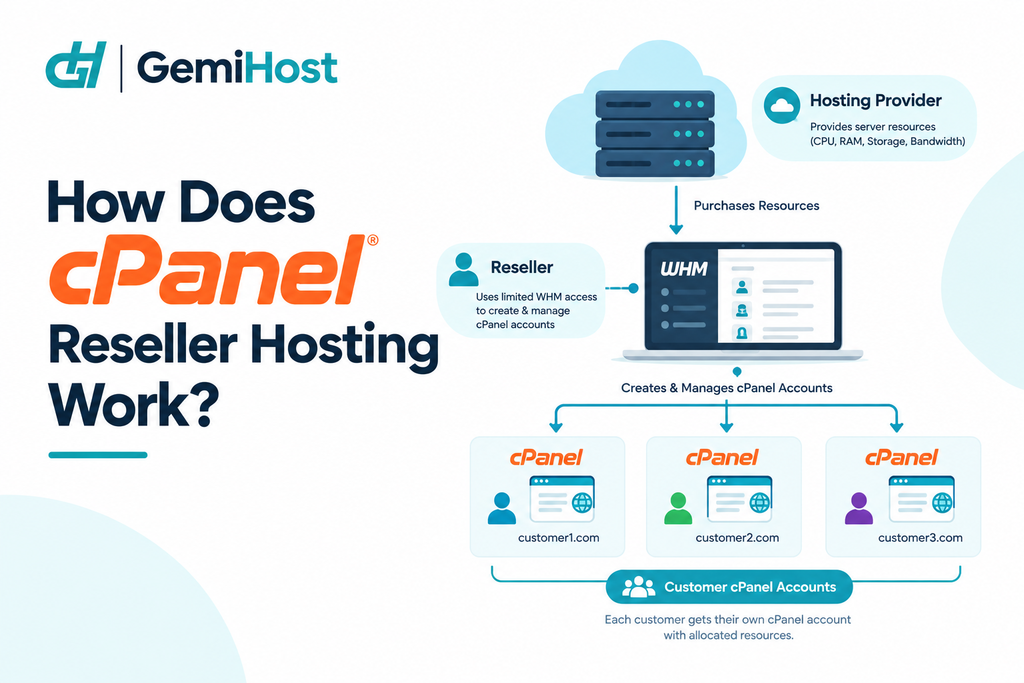
Since most beginners use cPanel, it’s good to understand the basics:
- You buy a reseller plan that includes WHM access and a resource quotaserverfellows
- In WHM, you create hosting packages (Starter, Business, etc.)serverfellows
- For each client, you create a cPanel account and assign a packageserverfellows
- The client gets their own cPanel login to manage files, emails, databases, SSL, etc.serverfellows
- You manage all accounts from WHM: suspend, upgrade, change passwords, view usageserverfellows
- You bill the client directly; the parent host keeps the server runningserverfellows+1
This is the core of how to start a hosting business for most new resellers.gw2k+1
cPanel Reseller Hosting Benefits for New Business Owners
Using cPanel reseller hosting gives you several advantages:
- Low startup cost: No need to buy servers or hire sysadminsgw2k+1
- Easy interface: WHM and cPanel are widely used, with many tutorials availableserverfellows
- White-label branding: Your logo, your brand, your nameserversskynethosting
- Recurring revenue: Monthly or yearly payments from clientsserverfellows
- Scalability: Start small, upgrade as you growskynethosting+1
- Isolated accounts: Each client has separate cPanel, improving security and stabilityserverfellows
These benefits make cPanel reseller hosting a popular choice for people learning how to start a hosting business.gw2k+1
Common Mistakes to Avoid (Even Newbee Writers and Hosts Make Them)
When you are new, some mistakes are normal, like wrong commans, spelling mistake, or confusing sentences. In hosting business, similar small errors can happen:
- Overselling: Creating too many accounts on a small plan, causing slow performanceserverfellows
- No backups strategy: Relying only on parent host backups; better to keep your own offsite backupsserverfellows
- Unclear support limits: Promising “everything” and then getting stuck with complex issuesgw2k
- Very low pricing: Prices so low you can’t profit after costs and taxesgw2k
Accept that you will make some mistakes, but learn and improve. Even this article might have small punctuation or spelling errors, like a newbee writer, but the information is still useful.
How to Become a Hosting Reseller: Simple Path
If your main goal is how to become a hosting reseller, follow this short path:
- Learn basics of domains, DNS, and hosting (many free videos and articles exist)serverfellows
- Buy a cPanel reseller plan from a trusted providerserverfellows+1
- Create 2–3 simple hosting packages in WHMserverfellows
- Make a basic website with your plans and contact infoskynethosting
- Get your first 3–5 clients (friends, local businesses, freelance projects)serverfellows
- Provide good support, ask for testimonials, and slowly raise prices as you gain experiencegw2k
You don’t need to be an expert on day one. You learn by doing, and each client teaches you something new.
Final Thoughts on How to Start a Hosting Business
Starting a hosting business is not magic; it’s a step-by-step process: research, choose a model, pick a provider, set packages, build a site, market, support, and scale. With cPanel reseller hosting, you can begin with a small budget and grow as you gain clients and confidence.gw2k+3
If you follow the steps in this guide, you will have a clear roadmap for how to start a hosting business without needing huge investment or advanced technical skills.gw2k+1
FAQ
What is the easiest way to start a hosting business?
The easiest way is to buy a cPanel reseller hosting plan, create hosting packages in WHM, and sell accounts to clients under your own brand while the parent host manages the server.gw2k+1
How much money do I need to start a hosting business?
With a reseller model, you can start with a few hundred dollars for a reseller plan, domain, basic website, and simple marketing. Full infrastructure (own servers) can cost thousands.nimb+1
Do I need technical skills to run a hosting business?
Basic technical knowledge helps, but cPanel/WHM are designed for non-experts. Most tasks are done via graphical interfaces, and you can learn as you go.gw2k+1
Can I start a hosting business part-time?
Yes. Many resellers start part-time while working as freelancers, designers, or developers, then grow into full-time as income increases.serverfellows
What is the difference between reseller hosting and owning servers?
Reseller hosting means you rent resources from a provider and resell them; owning servers means you buy hardware, rent rack space, and manage everything yourself, which is costlier and more complex.nimb+2
How do I get my first hosting clients?
Start with people you know: friends, local businesses, existing design/development clients. Offer discounts, free migrations, or extra support to attract early users.